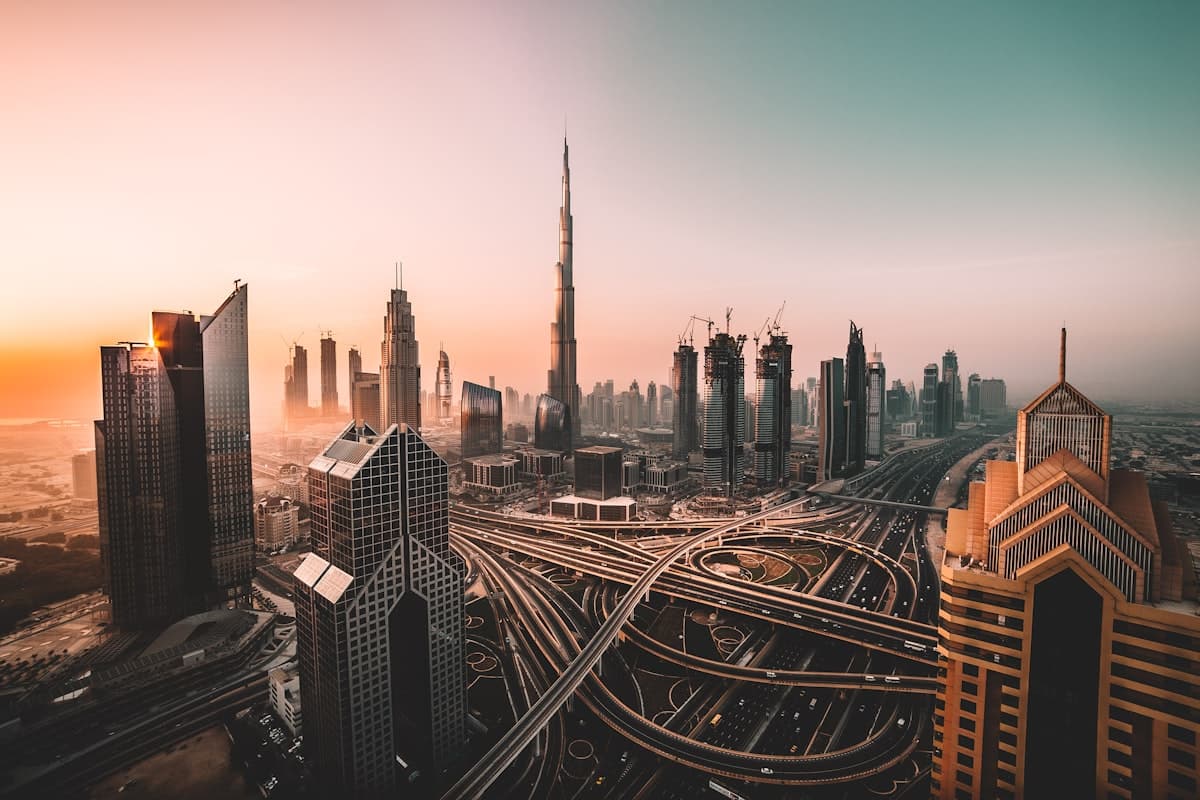
Inside Dubai's Play to Become the Trade Finance Capital
Dubai has always been a trade city. It sits at the intersection of every major shipping lane connecting Asia, Africa, and Europe. Jebel Ali is the largest port in the Middle East. DMCC is the world's largest free trade zone by number of registered companies. And DIFC hosts more financial institutions than any other center between London and Singapore.
But being a trade city and being the trade finance city are different things. Dubai is making a bet that it can be both.
The DIFC play
The Dubai International Financial Centre has been quietly building a trade finance ecosystem that rivals London's. In the last 18 months, it has licensed 14 new trade finance advisory firms, three commodity trade houses, and two specialist trade finance banks. Its regulatory framework — based on English common law — provides the legal certainty that international banks demand.
The key move: DIFC's adoption of a modified MLETR framework in Q4 2025, making it one of the first financial centers in the Middle East to legally recognize electronic trade documents. This was not coincidental timing — it came three months before Singapore's own MLETR implementation.
The DMCC corridor
DMCC — the Dubai Multi Commodities Centre — has taken a different approach. Rather than competing on regulation, it is competing on volume. The free zone now hosts over 23,000 registered companies, many of them commodity traders who generate significant LC and trade finance activity.
The latest initiative: a "digital trade corridor" with India's GIFT City (Gujarat International Finance Tec-City). The corridor aims to digitize the document flow for the roughly $85 billion in annual bilateral trade between the UAE and India. If it works, it would be the largest digital trade corridor by volume in the world.
The talent arbitrage
Here is where Dubai's play gets interesting. London has been the global center for trade finance expertise for decades. But a combination of Brexit complications, rising costs, and the UK's uncertain regulatory trajectory has pushed talent east. Dubai has been the primary beneficiary.
In 2025, an estimated 400 trade finance professionals relocated from London to Dubai — a small number in absolute terms, but significant in a specialized industry. These are not junior hires. They are heads of trade finance, documentary credit specialists, and compliance experts with 15-20 years of experience.
The tax advantage is obvious (zero personal income tax versus 45% in the UK). But the pull is also about proximity to the markets that matter. Three-quarters of global trade finance activity involves at least one counterparty in Asia, the Middle East, or Africa. Dubai is closer — in every sense — to those markets than London.
The obstacles
Dubai's ambitions face real headwinds:
Compliance perception. Despite significant improvements, Dubai still carries reputational risk around sanctions compliance and anti-money laundering. Global correspondent banks remain cautious about expanding trade finance activities through UAE-based entities. The FATF's 2024 review was broadly positive, but "broadly positive" is not the same as "London-grade trust."
Depth of legal infrastructure. DIFC's English common law framework helps, but Dubai lacks the depth of trade finance case law that London has built over centuries. When a novel LC dispute arises, London courts have precedents. Dubai courts are still building them.
Liquidity. Singapore and London have deep secondary markets for trade finance assets — receivables, bankers' acceptances, forfaiting instruments. Dubai's secondary market is nascent. Without it, the cost of trade finance remains higher than in more established centers.
The verdict
Dubai will not replace London or Singapore as a trade finance center. But it does not need to. What it is building is a parallel hub — one that serves the India-Middle East-Africa trade corridors that London and Singapore have historically served from a distance.
The combination of regulatory modernization (MLETR adoption), infrastructure (DMCC + DIFC), talent acquisition (London expats), and geographic advantage (six-hour flight to Mumbai, Nairobi, or Lagos) makes a compelling case.
The question is execution. Dubai has a history of ambitious announcements that take longer to materialize than the press releases suggest. The digital trade corridor with India is the test case. If it delivers real volume within 18 months, Dubai's trade finance ambitions are credible. If it stalls, the skeptics will have been right.
We will be reporting on this closely.
Enjoyed this? Get it in your inbox every week.
Sharp trade finance intelligence, delivered free. No spam, no sponsored content.