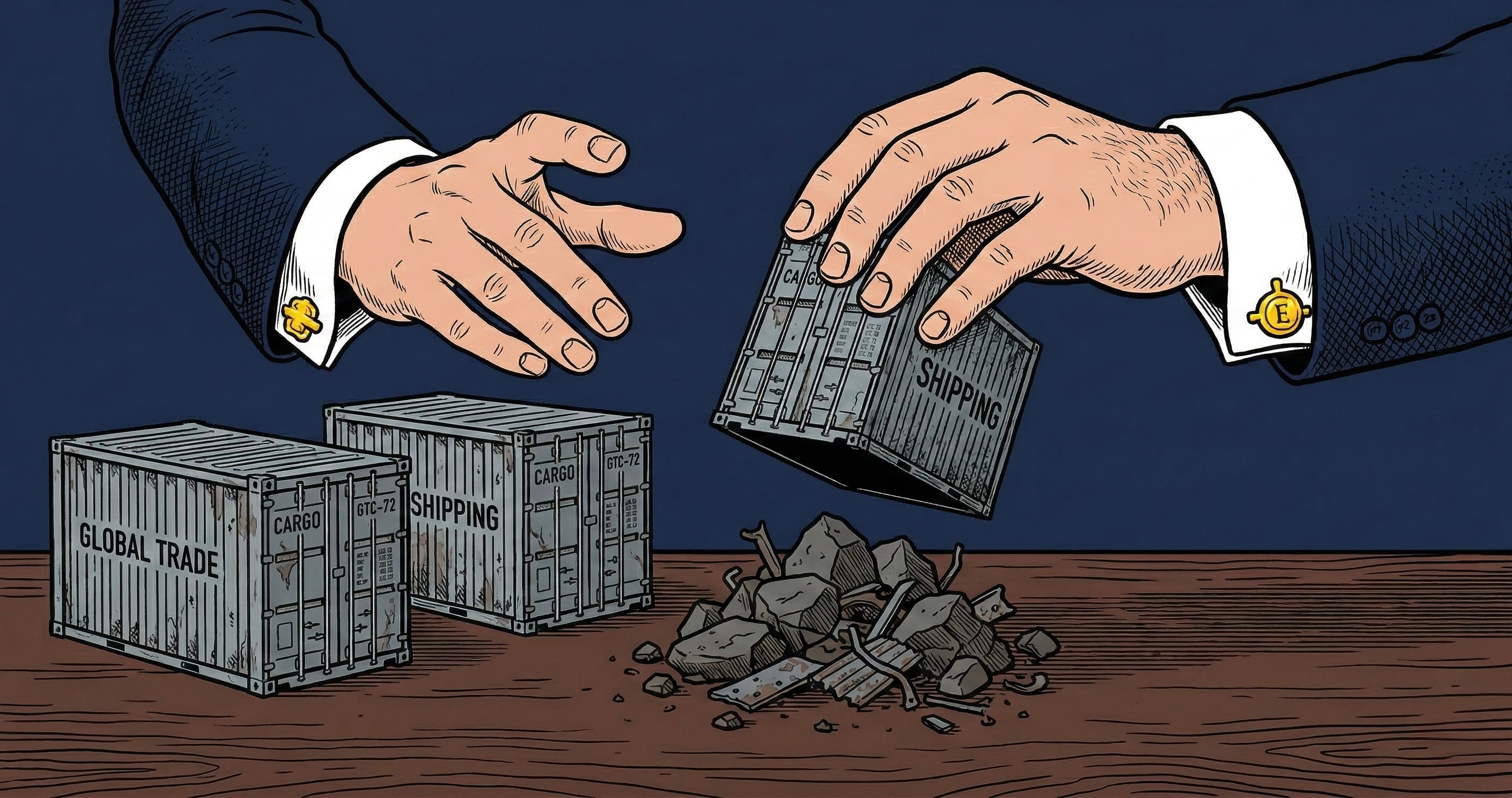
The $500 Million Nickel That Wasn't There
Prateek Gupta sold Trafigura nickel for years. By 2022, the Indian businessman's network of companies had traded $3.3 billion worth of metal through the Swiss commodity house's books, according to court documents. There was just one problem: much of the nickel did not exist.
On January 30, a London High Court found Gupta liable for what Judge Pushpinder Saini called "fraud on a grand scale." The damages, including interest, are expected to reach approximately $640 million, according to figures cited by Trafigura's barrister Nathan Pillow KC at a subsequent hearing. On February 26, Gupta's application to appeal was denied.
The ruling in Trafigura Pte Ltd & Anor v Prateek Gupta & Ors [2026] EWHC 159 (Comm) caps a three-year legal battle that has exposed exactly how commodity trade finance fraud works in practice, and how many layers of professional scrutiny it can pass through before anyone thinks to open the container.
The scheme
The structure was straightforward. Gupta's companies, including TMT Metals AG, UIL Singapore, UIL Malaysia, and several entities the court found to be "fraudulent vehicles," agreed to sell Trafigura high-purity 99.8% nickel in buyback transactions. Trafigura would purchase the metal at origin, own it during transit, and sell it back to Gupta's companies at destination for a markup of roughly 4-6% annualised. Trafigura was, in effect, the trade financier.
Citibank provided Trafigura an $850 million credit line to finance these operations, according to the court judgment. The volumes were enormous and the shipping times were long, but the documents checked out. Inspection certificates, bills of lading, insurance documents. Gupta later admitted in court to preparing "thousands" of fraudulent shipping documents.
The containers held carbon steel, iron briquettes, and aluminium sheets. Materials worth less than a twentieth of the nickel they were supposed to contain. Trafigura ultimately recovered approximately 2% of the funds it had paid out.
In spring 2022, Russia's invasion of Ukraine sent nickel prices into a spiral violent enough to halt trading on the London Metal Exchange for a week. The volatility caught Citibank's attention. On October 27, 2022, during LME Week in London, Citibank ceased supporting the trades. By November 9, the bank had arranged for cargo inspections.
Trafigura began funding the shipments from its own balance sheet. When it finally opened the containers, it found scrap metal where 99.8% pure nickel was supposed to be.
The documents
The fraud did not rely only on fake cargo. It relied on fake paper.
A Singapore-based freight forwarder called Techies Logistics issued duplicate bills of lading on multiple occasions, the court found, acting on Gupta's instructions. In one case, as first reported by Global Trade Review, both Trafigura and Australian mining company Yancoal showed up to claim the same cargo from Maersk, each holding bills of lading they believed were authentic. A jointly commissioned investigation found Techies had issued a duplicate set without Maersk's authorisation. The cargo turned out to be stainless steel worth approximately $230,000, less than the demurrage and storage fees Maersk was claiming.
In a separate case, UK company Hyphen Trading tried to take delivery of 404 tonnes of nickel it had purchased for $8.4 million. The cargo had been loaded in Kaohsiung, Taiwan, onto the container ship OOCL Jakarta. When Hyphen attempted to locate the consignment, OOCL's lawyers delivered the news: the bill of lading was a "fraudulent duplicate" created by Techies Logistics.
Judge Saini wrote: "I find that on each of these cases, the UIL companies were able to perpetrate their fraud because of the involvement of Techies Logistics... They are the common thread in other claims involving duplicate bills of lading. It cannot be a coincidence."
Techies Logistics has not publicly responded to the judgment. Global Trade Review reported that the company did not reply to requests for comment.
Who was checking?
This is where the case matters beyond the parties involved.
The nickel passed through Trafigura's own metals desk. Trafigura is a $240 billion-a-year commodity trader with a risk management operation the banking sector considered best-in-class. The transactions were financed by Citibank through an $850 million facility. The cargo moved through major shipping lines including Maersk and OOCL. Bills of lading were issued, endorsed, and presented. Letters of credit were drawn. The documentation workflow functioned exactly as designed.
None of it caught the fraud.
Judge Saini found that Trafigura's employees, including former head nickel trader Sokratis Oikonomou, were "wholly innocent of any wrongdoing." Gupta's defence, that Trafigura staff had devised the scheme, was rejected. The judge found Gupta was not "an honest witness" and had fabricated claims, including a serious illness in November 2022, when Trafigura demanded cargo inspections.
Citibank grew suspicious not because of the documents but because of the market. The LME nickel crisis made the transaction volumes look unusual relative to prevailing prices. Without that external shock, there is no indication in the judgment that anyone would have opened a container.
David Cuckney, assistant director of the ICC International Maritime Bureau, told Global Trade Review that over 90% of bills of lading for containerised cargoes analysed by the IMB that turn out to be suspect come from NVOCCs, non-vessel operating common carriers like Techies. These are small intermediaries that issue their own transport documents. Many are legitimate businesses that can be pressured by large clients into issuing documents they should not. The IMB exists specifically to verify bills of lading for banks and traders, but not every transaction gets checked. In this case, the documents sailed through.
The Abu Dhabi connection
By March 2024, Gupta told the court he had run out of money. He changed law firms. He attempted to settle. Then the money reappeared.
At the February 26 hearing, Trafigura's legal team revealed that Gupta's defence had been "funded, in significant part" by two companies controlled by Sheikh Mohammed Bin Sultan Bin Al Nahyan, a member of the Abu Dhabi royal family, according to court submissions reported by Global Trade Review. The entities, Anza Capital Investment LLC and Nomas Global Investments LLC-SPC, provided a GBP 3 million facility for Gupta's legal costs. The facility was initially arranged through Anza and later novated to Nomas.
Nathan Pillow KC told the court there were "commercial oddities" with the arrangement, noting that litigation funders typically back claimants, not defendants. "My clients wanted to know why the Abu Dhabi royal family was advancing money to Mr Gupta," Pillow said.
The question remains unanswered. Neither Anza Capital nor the Abu Dhabi media office responded to requests for comment, according to Global Trade Review. Gupta's legal team did not address the funding comments in court.
At the same hearing, Gupta's monthly living expenses under the worldwide freezing order were reduced from GBP 20,000 to GBP 5,000.
What it means
The Trafigura-Gupta case is not an outlier. It is the latest in a pattern of commodity fraud built on the same vulnerability: the gap between what trade documents say and what physically exists.
Hin Leong's $3.5 billion collapse in 2020 involved forged documents and fictitious trades. The Agritrade International fraud in 2020 used recycled warehouse receipts. In this case, containers of scrap metal were sold as nickel, using forged bills of lading issued by a freight forwarder with a handful of employees in Singapore.
The methods are almost identical every time. Forge the document, move the cargo, collect the financing, and hope nobody inspects.
Trade finance still runs on trust in paper. Bills of lading, inspection certificates, and warehouse receipts are only as reliable as the people and companies that issue them. When a freight forwarder in Singapore can produce duplicate bills of lading that fool a $240 billion commodity trader, its banking partners, and multiple shipping lines simultaneously, the system has a document verification problem that compliance headcount alone will not solve.
The nickel was not there. The documents said it was. And for years, that was enough.
Enjoyed this? Get it in your inbox every week.
Sharp trade finance intelligence, delivered free. No spam, no sponsored content.